Tree Care Tips
Tree Removal Cost Guide: Timing, Pricing, Who Pays & How to Save
The Cheapest Time of Year for Tree Removal
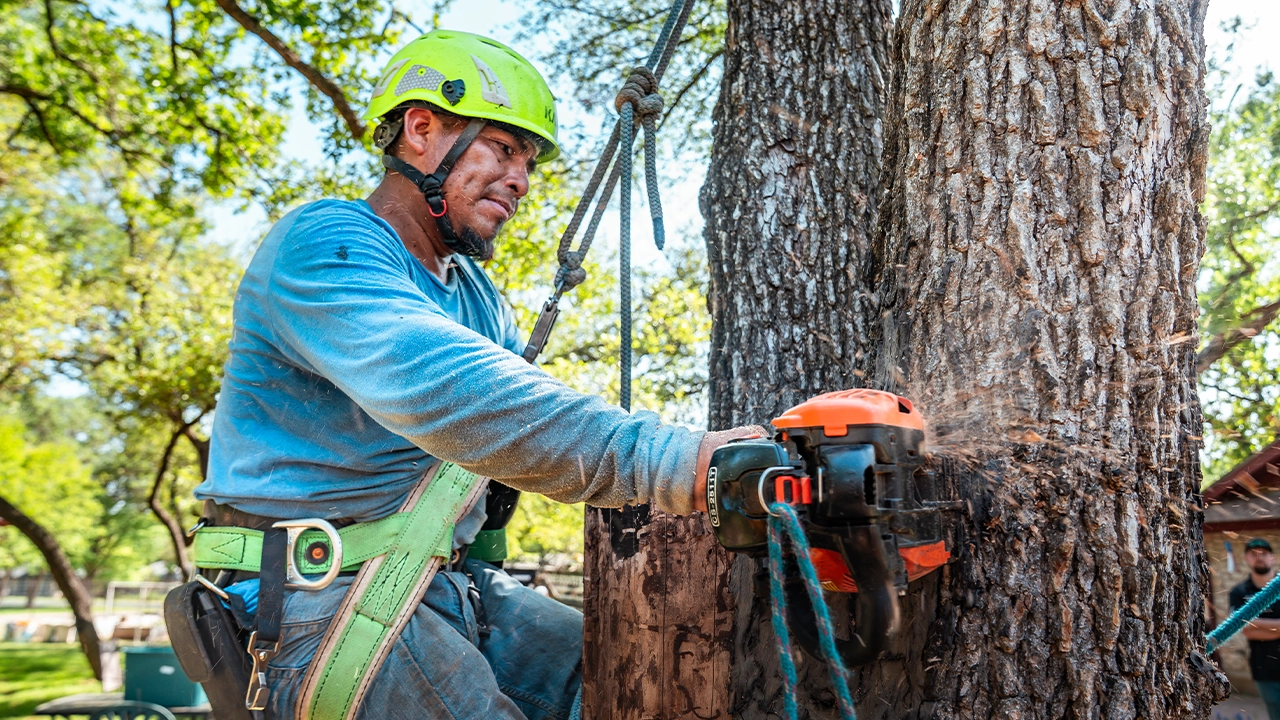
I'll start with the question that brought most of you here. The cheapest time of year for tree removal is late fall through winter — roughly November through February. During this window, demand drops, trees are dormant (meaning less foliage and lighter weight), and crews have availability they don't have during spring storm season.
In Central Texas specifically, winter removals are also easier on your property. The ground is firmer, there's less risk of lawn ruts from heavy equipment, and the cooler temperatures let crews work more efficiently.
Companies like Tree Scouts often offer better pricing during winter months simply because we're trying to keep our crews busy during the slow season. That's not a gimmick — it's how the business cycle works. If you have a non-emergency removal you've been putting off, scheduling it between November and February is the smartest financial move you can make.
When Tree Removal Costs the Most
Costs spike at predictable times:
- March through June — prime storm season and spring growth. Everyone wants work done at the same time, and scheduling gets tight.
- Immediately after storms — emergency tree removal often involves overtime, weekend rates, and urgent mobilization of crews and equipment.
- Complex or hazardous jobs — trees near power lines, on structures, or requiring crane access cost more regardless of season because the safety requirements and equipment needs are higher.
How Big of a Tree to Charge $1,000 for Removal?
This is one of the most common questions I get, and the answer is more nuanced than just height. But here's a practical guide based on what we actually quote:
A tree that costs roughly $1,000 to remove is typically 30 to 50 feet tall with a trunk diameter of 12 to 20 inches. In Central Texas, that's your average mature cedar elm, a mid-size live oak, or a pecan that's been growing for 20-30 years. These trees require a climber or bucket truck, rigging for the larger limbs, and a half-day to full day on site with a 2-3 person crew.
Here's the broader pricing picture by size:
- Under 25 feet / under 10 inches diameter: $250 to $600. Small ornamentals, young oaks, crape myrtles. Usually a quick half-day job.
- 25 to 50 feet / 12 to 20 inches diameter: $600 to $1,500. This is where the $1,000 mark usually falls. Standard rigging, climber or bucket truck, full cleanup.
- 50 to 80 feet / 20+ inches diameter: $1,500 to $3,500. Large live oaks, heritage pecans. Full crew, potential crane, full day or more.
- Hazard or crane-assisted: $2,500 to $5,000+. Trees on structures, tangled in power lines, dead trees in tight spaces.
But size isn't the only factor. A 40-foot tree in the middle of an open yard is a $700 job. That same tree with branches overhanging a roof, a fence on one side, and power lines nearby becomes a $1,500 job because every branch has to be rigged and lowered by rope instead of free-dropped. Access and proximity to structures often matter more than height alone.
Who Should Pay for Tree Removal?
This question comes up constantly, especially after storms. Here's how it typically works in Texas:
Your tree, your property, your responsibility. If a tree on your property needs to come down — whether it's dead, hazardous, or just in the way — you pay for the removal. This is true whether the tree is living or dead, and whether it fell naturally or was damaged in a storm.
Neighbor's tree falls on your property. This one surprises most people: your homeowners insurance typically handles it, not your neighbor's. In Texas, if a tree from your neighbor's yard falls onto your property due to a storm or natural causes, you're generally responsible for cleanup and removal costs. Your homeowners policy may cover it if the tree damaged a structure (house, fence, shed).
The exception — known hazard negligence. If you can demonstrate that your neighbor knew their tree was dead or hazardous (documented letters, arborist reports, prior complaints) and they did nothing, they may be held liable. But this is a legal question that requires documentation — verbal conversations don't hold up well.
City or utility trees. Trees in the public right-of-way (between the sidewalk and street) are typically the city's responsibility. Trees threatening utility lines are often handled by the utility company at no cost to you — more on that below.
HOA common area trees. If the tree is on HOA common property (not your individual lot), the HOA is generally responsible for removal. Check your CC&Rs for specifics. In Georgetown neighborhoods like Sun City and Berry Creek, the HOA has specific processes for common-area tree issues.
Bottom line: if you're unsure who's responsible, start with your homeowners insurance company. They'll tell you quickly whether the situation falls under your policy. Here's our full guide on what to do when a tree falls on your house.
How to Get a Tree Cut Down for Free
Let me be realistic about this: genuinely free tree removal is uncommon, and when it happens, there are usually strings attached. But there are a few legitimate scenarios:
Utility company removal. If a tree is threatening power lines, your electric utility (Oncor, Pedernales Electric Co-op, Austin Energy, etc.) will often remove it at no cost — or at least trim it back from the lines. Contact your utility provider directly and ask about their vegetation management program. They won't remove a tree just because you want it gone, but if it's an active threat to power infrastructure, they'll typically handle it.
City right-of-way trees. Some municipalities will remove dead or hazardous trees in the public right-of-way (the strip between the sidewalk and street) at no cost to the homeowner since that land is technically city property. Call your city's public works or urban forestry department to ask.
Logging value offset. If you have a large, valuable hardwood — particularly walnut, pecan, or certain oaks — a logging company or sawmill may remove it for free (or even pay you) if the timber has enough resale value. This is more common with very large trees on rural properties than with standard residential removals.
Community programs. Organizations like TreeFolks in Austin occasionally offer removal assistance for qualifying situations, particularly for low-income homeowners dealing with hazardous trees.
A word of caution: if someone knocks on your door offering free tree removal, be very skeptical. Storm chasers and unlicensed operators sometimes offer "free" removal in exchange for the wood, then cause property damage, leave stumps and debris, or worse — get injured on your property without carrying workers' compensation insurance. Always verify credentials, insurance, and get everything in writing, even for free work.
What Is the 5-15-90 Rule in Tree Felling?
This is an industry safety guideline used during tree felling operations. It's not a law — it's a best practice that experienced arborists and loggers follow to minimize risk.
The 5-15-90 rule breaks down like this:
5 — the five-second rule. Before making any felling cut, look up for at least 5 seconds. You're checking for dead branches (called "widow makers") that could fall during the operation, power lines, other trees the falling tree could hang up on, and anything overhead that changes your plan.
15 — the fifteen-foot rule. Establish a clear escape route at least 15 feet from the base of the tree, angled away from the planned fall direction. Everyone on the crew who isn't operating the saw should be at least 15 feet away (two tree lengths is even better for large trees). This is your safety buffer if the tree doesn't fall where planned.
90 — the ninety-degree rule. Your escape path should be roughly 90 degrees from the planned fall direction — meaning you move sideways and slightly back from where the tree is falling, not directly behind it. Trees can kick back off the stump, and standing directly behind the fall line is one of the most dangerous positions.
Why does this matter to homeowners? Because it's a good way to evaluate whether the company you're hiring knows what they're doing. If a crew shows up and starts cutting without clearing escape routes, without checking overhead hazards, and without positioning crew members at safe distances — they're not following basic industry safety protocols. That's a crew that's going to damage your property or hurt someone.
Professional tree removal isn't just about getting the tree on the ground. It's about getting it on the ground safely, in the right direction, without hitting anything it shouldn't. The 5-15-90 rule is one of the foundational safety concepts that separates trained arborists from guys with chainsaws.
How to Save Money on Tree Removal (Without Cutting Corners)
Here are the legitimate ways to keep removal costs reasonable:
- Schedule November through February. Demand is lowest, crews are available, and you'll often get better pricing.
- Bundle multiple trees. Two or three removals in one visit costs significantly less per tree than separate trips.
- Choose cut-and-stack over full haul-off. If you have room for firewood or can arrange your own disposal, skipping the haul-off saves $100-$300 per tree.
- Be flexible on scheduling. Weekday availability is often cheaper than weekend work, and a crew that can fit you into an existing route nearby may offer a better rate.
- Get the right diagnosis first. I've quoted removals where the tree actually just needed pruning or fertilization. A free arborist assessment can save you from removing a tree that didn't need to go.
When "Cheap" Becomes Expensive
Be cautious of bids that seem too good to be true. A quote of $300 to remove a 40-foot oak means the company is either uninsured, planning to cut corners on safety, or going to leave you with a mess. Always verify:
- Proof of insurance — commercial liability AND workers' compensation. If a worker gets hurt on your property without workers' comp, you can be liable.
- ISA Certified Arborist oversight — you can verify any arborist's credentials at treesaregood.org.
- Written estimate with specific scope, cleanup terms, and payment structure. If it's not in writing, it doesn't exist.
Improper tree work causes damage that costs far more to fix than doing it right the first time.
Get Your Free Tree Removal Estimate
Tree Scouts provides free on-site assessments with an ISA certified arborist — not a salesperson. We'll tell you honestly whether the tree needs to come down, what it will cost, and whether there's a less expensive alternative. Our Scout's Honor promise means we only charge 25% deposit (not 50% like most companies) and guarantee satisfaction before final payment.
We serve Georgetown, Leander, Austin, Cedar Park, Round Rock, Lakeway, Hutto, Pflugerville, and Bee Cave. Get your free quote or call 512-265-0861.
Tree Removal Services · Stump Grinding · Emergency Tree Service · Arborist Consultations
Free estimate
Not sure what your trees need?
Book a free estimate with an ISA Certified Arborist. We walk your property, tell you what actually needs doing, and put the plan in writing. No pressure and no upsell.
500+ five-star Google reviews · ISA Certified Arborists · Insured crews · Scouts Honor promise
About the Author
Levi Williams, ISA Certified Arborist #TX-4955A | TRAQ Qualified | Wildfire Risk Reduction Qualified (WRRQ) | TDA Pesticide License #0933008 | Urban Forestry #TX-4955AF
Levi is the lead arborist at Tree Scouts Tree Service, headquartered in Georgetown, TX. His expertise has been cited by Martha Stewart for fruit tree pruning guidance. He oversees all arborist assessments, treatment plans, and crew operations across 12 Central Texas service areas. Levi follows ISA and ANSI A300 standards on every project.

Request your free quote
Tell us about your trees and a real Tree Scout will get back to you quickly. We only use your information to prepare your quote.
What happens next
1
We reach out fast to confirm details, by call or text, whichever you prefer.
2
A Tree Scout confirms your free flat-rate quote on site.
3
We do the work, clean up, and walk the finished job with you. Pay the balance only when you are happy.
What We Do
Complete Tree Care for Central Texas Homes and HOAs
Every service is quoted free on site, overseen by an ISA Certified Arborist, and finished with a walkthrough before the balance is collected.

Tree Trimming
ANSI A300 pruning for live oaks and shade trees. No topping, no over-thinning.
Learn more
Tree Removal
Safe takedowns near homes, fences, and lines, with complete haul-off and cleanup.
Learn more
Stump Grinding
Flat-rate grinding 6 to 8 inches below grade, ready for sod or replanting.
Learn more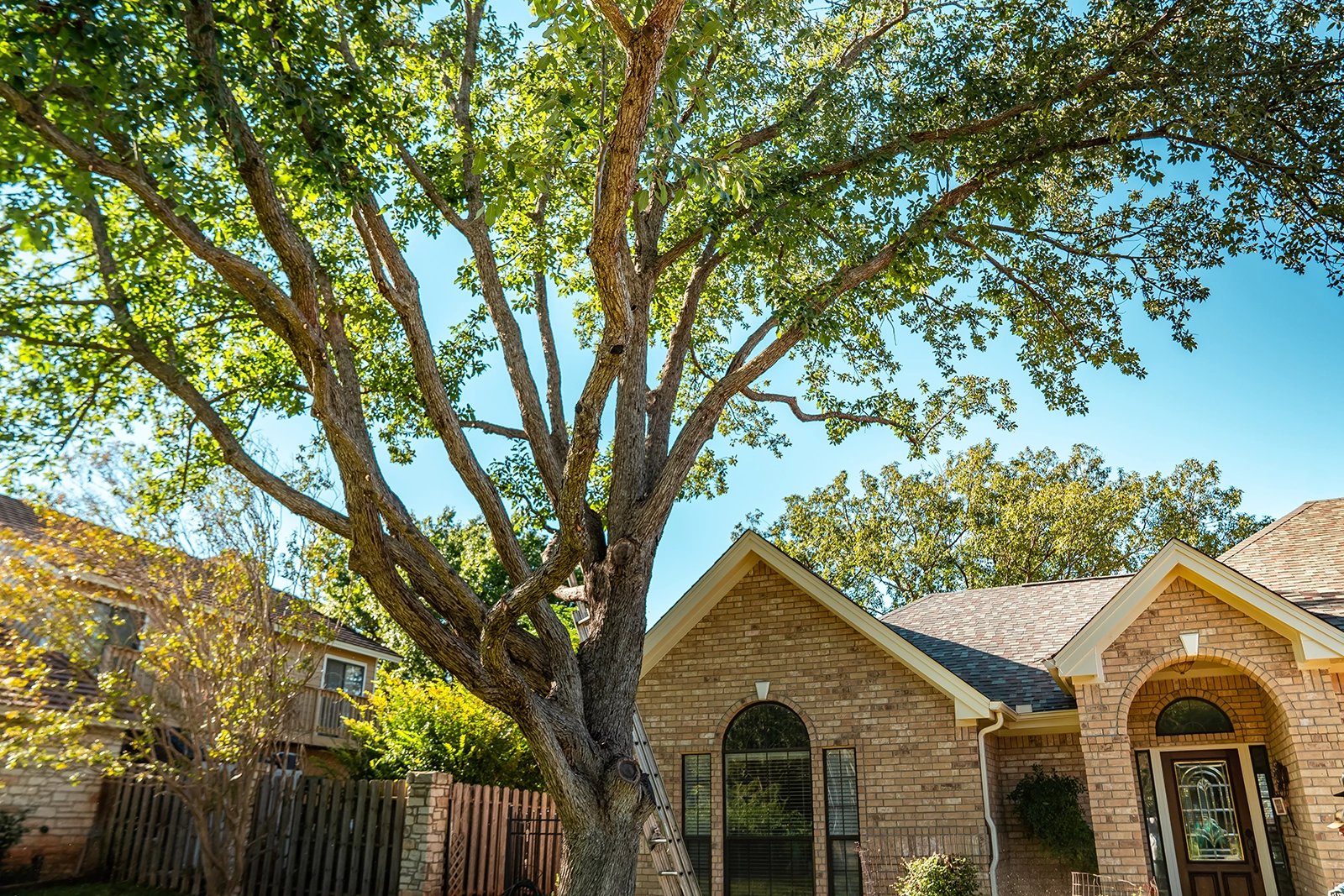
Oak Wilt Treatment
Propiconazole trunk injections and prevention plans for Central Texas oaks.
Learn more
Tree Fertilization
Deep root feeding matched to Central Texas soil and your tree species.
Learn more
Tree Planting
Right tree, right place. We source, deliver, and plant for long-term health.
Learn more
Arborist Services
Diagnosis, risk evaluation, and written reports from certified arborists.
Learn more
Emergency Tree Service
Storm damage and hazardous trees handled fast, any day of the week.
Learn moreCommon Questions
How big of a tree to charge $1000 for removal?
A tree that costs around $1,000 to remove is typically 30-50 feet tall with a trunk diameter of 12-20 inches — your average mature cedar elm or mid-size live oak. Trees under 25 feet usually cost less. Trees over 50 feet or near structures cost more due to rigging and crew time.
Who should pay for tree removal?
The property owner where the tree stands is generally responsible. If a tree falls on your property from a neighbor's yard, your homeowners insurance typically covers it. The exception is if your neighbor knew the tree was hazardous and did nothing — then they may be liable.
Can you get a tree removed for free?
Sometimes. Utility companies remove trees threatening power lines for free. Some municipalities offer free removal for hazardous trees in the right-of-way. Logging companies may remove valuable hardwoods at no cost if the wood has resale value. Always verify credentials before accepting free work.
Related Tips

Service Areas
Tree Care Across Central Texas
Tree Scouts provides ISA standard tree trimming, tree removal, and arborist care across Georgetown, Leander, Lakeway, Austin, Cedar Park, Round Rock, Pflugerville, Hutto, and the surrounding Hill Country. Every estimate is free and walked by an ISA Certified Arborist.
Georgetown
Tree care in Georgetown, TX
Leander
Tree care in Leander, TX
Austin
Tree care in Austin, TX
Cedar Park
Tree care in Cedar Park, TX
Round Rock
Tree care in Round Rock, TX
Lakeway
Tree care in Lakeway, TX
Pflugerville
Tree care in Pflugerville, TX
Hutto
Tree care in Hutto, TX
Liberty Hill
Tree care in Liberty Hill, TX
Bee Cave
Tree care in Bee Cave, TX
Dripping Springs
Tree care in Dripping Springs, TX
Marble Falls
Tree care in Marble Falls, TX