Tree Care Tips
What to Do When a Tree Falls on Your House in Texas
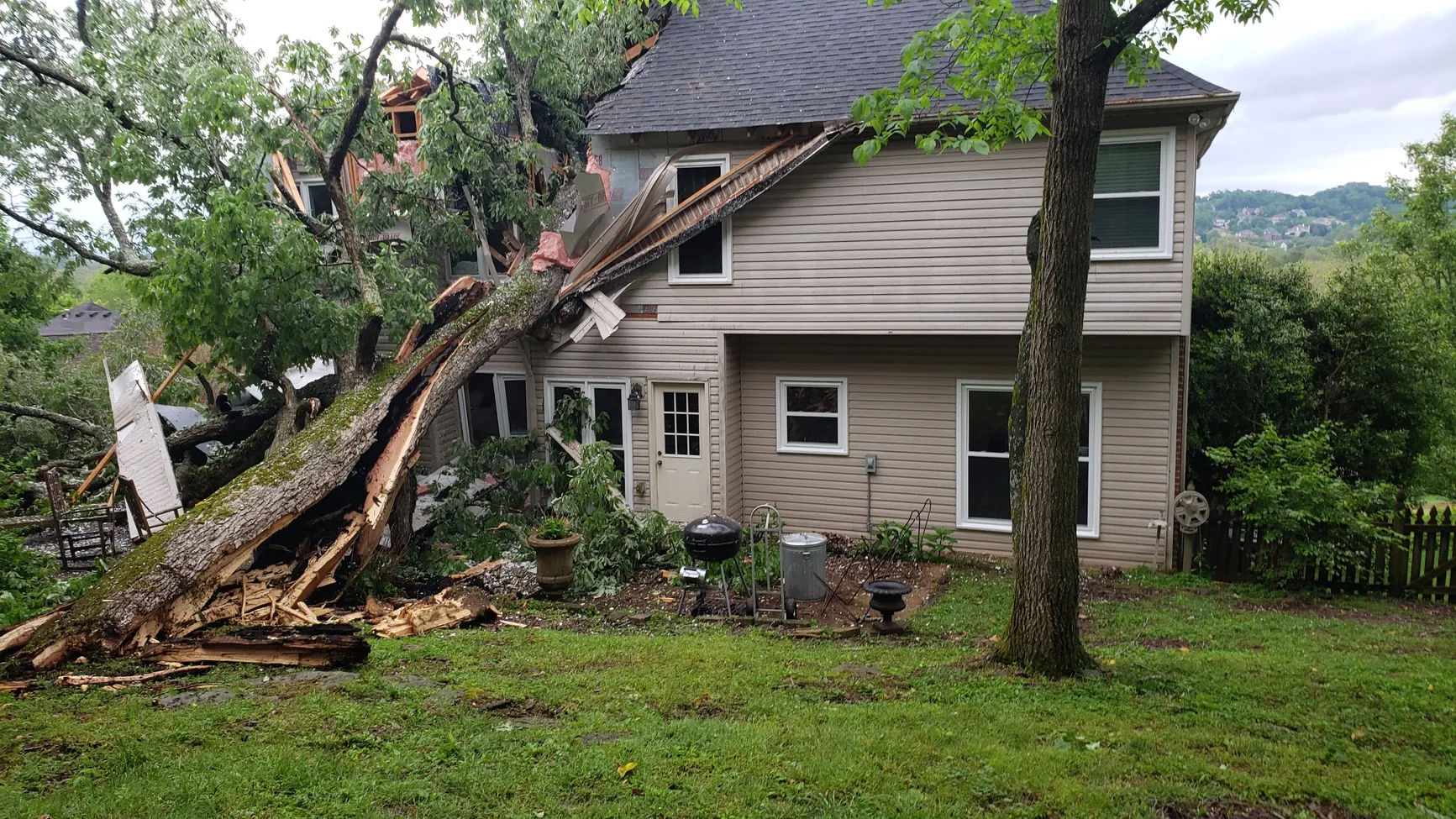
First: Make Sure Everyone Is Safe
If a tree has fallen on your house, your first priority is making sure every person and pet in the home is safe and accounted for. Do not go back inside to assess damage. Do not try to move branches off the roof yourself. Do not stand under any part of the tree that's still elevated.
If anyone is trapped or injured, call 911 immediately. If the tree has pulled down power lines, keep everyone at least 35 feet away and call 911 and your utility provider. Once everyone is safe, here's the step-by-step process.
Step 1: Call Your Insurance Company
Before you call a tree company, call your homeowners insurance. They need to document the damage before removal begins, and some policies require pre-authorization for emergency work. Tell them which part of the house is affected, whether there's structural penetration, whether power lines are involved, and whether water is entering.
Take photos from multiple angles before anything gets moved. These photos are your best evidence for the insurance claim.
Step 2: Call a Certified Emergency Tree Service
Emergency tree removal from a structure is one of the most dangerous operations in tree care. The tree's weight is unevenly distributed, the structure underneath may be compromised, and one wrong cut can cause the entire tree to shift.
Look for an ISA Certified Arborist on the team, full commercial insurance, crane capability, and written documentation for your insurance claim. Do NOT hire storm chasers or uninsured crews.
Step 3: Protect Against Further Damage
Most Texas homeowners policies require you to take reasonable steps to prevent further damage. If rain is forecast and the roof is punctured, cover the opening with a tarp. If water is entering, move valuables. If the tree has compromised a load-bearing wall, do not enter that section.
Document every protective step you take. These mitigation costs are typically reimbursable under your policy.
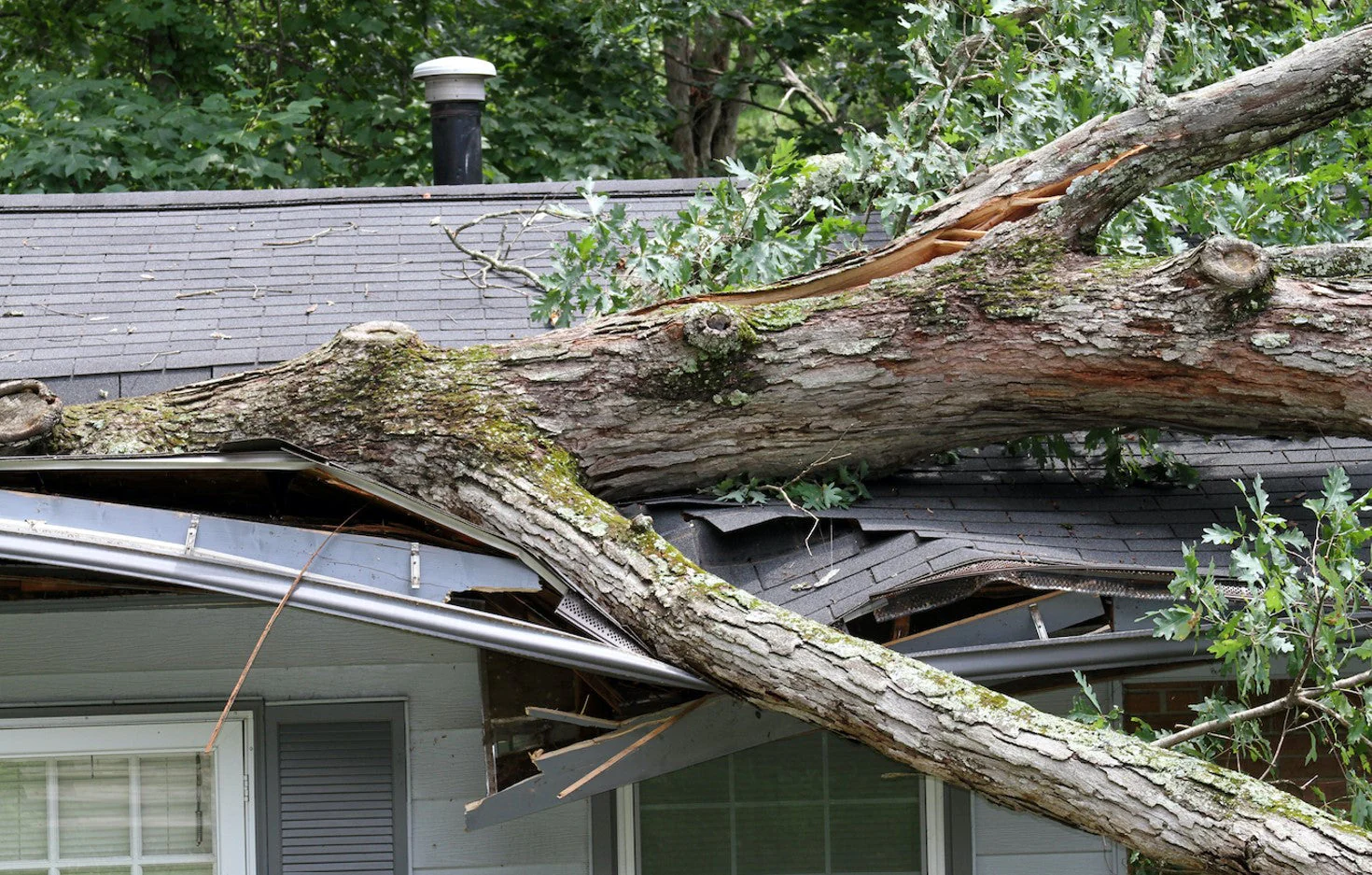
What Insurance Usually Covers in Texas
Homeowners insurance generally covers structural repairs, tree removal from the structure, debris cleanup, and temporary housing if the home is uninhabitable.
Insurance generally does NOT cover removing a tree that fell in the yard but didn't hit anything, stump removal, or pre-existing tree conditions you knew about but didn't address. This is why proactive tree risk assessment matters.
Who Pays If a Neighbor's Tree Falls on Your House?
In Texas, your own homeowners insurance typically handles the claim regardless of where the tree came from. The exception is if you can prove your neighbor knew the tree was hazardous and failed to act. But that's a legal question. Focus on getting the tree removed safely first.
What NOT to Do After a Tree Falls on Your House
Don't try to remove it yourself. The risk of structural collapse, chainsaw injury, or electrocution is extreme. Don't hire storm chasers. After major storms, unlicensed crews flood neighborhoods. They're uninsured and disappear before problems surface. Don't sign anything without reading it. Get a written estimate before work begins. Don't delay. A tree on your roof is an active load the structure wasn't designed for.
Prevent This: Get a Tree Risk Assessment
Most trees don't fall without warning. Dead branches, trunk cracks, root zone issues, lean changes, canopy dieback — a trained arborist can spot these months or years before failure. If you have large trees near your home, an annual inspection is one of the smartest investments you can make. Here's how to assess storm damage.
Emergency Tree Removal Across Central Texas
Tree Scouts provides 24/7 emergency tree removal throughout Central Texas. Same-day response, full insurance documentation, and arborist-led operations. We serve Georgetown, Leander, Austin, Cedar Park, Round Rock, and Lakeway. Call 512-265-0861 for immediate response.
Free estimate
Not sure what your trees need?
Book a free estimate with an ISA Certified Arborist. We walk your property, tell you what actually needs doing, and put the plan in writing. No pressure and no upsell.
500+ five-star Google reviews · ISA Certified Arborists · Insured crews · Scouts Honor promise
About the Author
Levi Williams, ISA Certified Arborist #TX-4955A | TRAQ Qualified | Wildfire Risk Reduction Qualified (WRRQ) | TDA Pesticide License #0933008 | Urban Forestry #TX-4955AF
Levi is the lead arborist at Tree Scouts Tree Service, headquartered in Georgetown, TX. His expertise has been cited by Martha Stewart for fruit tree pruning guidance. He oversees all arborist assessments, treatment plans, and crew operations across 12 Central Texas service areas. Levi follows ISA and ANSI A300 standards on every project.

Request your free quote
Tell us about your trees and a real Tree Scout will get back to you quickly. We only use your information to prepare your quote.
What happens next
1
We reach out fast to confirm details, by call or text, whichever you prefer.
2
A Tree Scout confirms your free flat-rate quote on site.
3
We do the work, clean up, and walk the finished job with you. Pay the balance only when you are happy.
What We Do
Complete Tree Care for Central Texas Homes and HOAs
Every service is quoted free on site, overseen by an ISA Certified Arborist, and finished with a walkthrough before the balance is collected.

Tree Trimming
ANSI A300 pruning for live oaks and shade trees. No topping, no over-thinning.
Learn more
Tree Removal
Safe takedowns near homes, fences, and lines, with complete haul-off and cleanup.
Learn more
Stump Grinding
Flat-rate grinding 6 to 8 inches below grade, ready for sod or replanting.
Learn more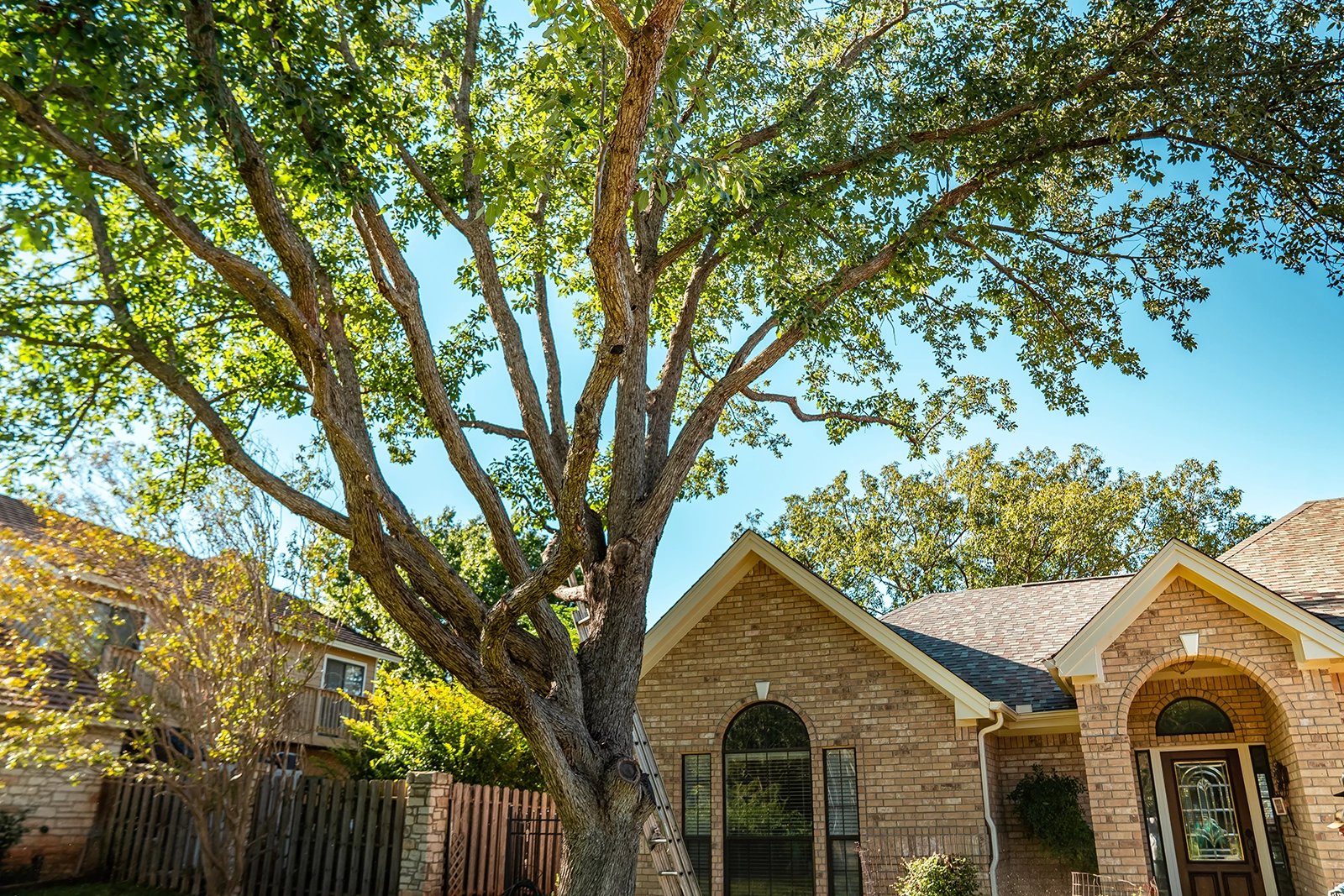
Oak Wilt Treatment
Propiconazole trunk injections and prevention plans for Central Texas oaks.
Learn more
Tree Fertilization
Deep root feeding matched to Central Texas soil and your tree species.
Learn more
Tree Planting
Right tree, right place. We source, deliver, and plant for long-term health.
Learn more
Arborist Services
Diagnosis, risk evaluation, and written reports from certified arborists.
Learn more
Emergency Tree Service
Storm damage and hazardous trees handled fast, any day of the week.
Learn moreCommon Questions
Does homeowners insurance cover tree damage to a house in Texas?
Generally yes if the damage was caused by a covered peril like wind, hail, or lightning. Your homeowners policy typically covers both the structural damage and the cost of removing the tree from the structure. Policies and deductibles vary so contact your insurance company immediately.
Who pays for tree removal if my neighbor's tree falls on my house?
In Texas your own homeowners insurance typically handles the claim regardless of where the tree came from. The exception is if you can prove your neighbor knew the tree was hazardous and failed to act. Focus on getting the tree removed safely first.
How quickly can an emergency tree removal happen?
Tree Scouts offers same-day emergency response across Central Texas. For trees on structures we prioritize getting the tree off the house as quickly and safely as possible usually within hours of your call. Call 512-265-0861 for immediate response.
Service Areas
Tree Care Across Central Texas
Tree Scouts provides ISA standard tree trimming, tree removal, and arborist care across Georgetown, Leander, Lakeway, Austin, Cedar Park, Round Rock, Pflugerville, Hutto, and the surrounding Hill Country. Every estimate is free and walked by an ISA Certified Arborist.
Georgetown
Tree care in Georgetown, TX
Leander
Tree care in Leander, TX
Austin
Tree care in Austin, TX
Cedar Park
Tree care in Cedar Park, TX
Round Rock
Tree care in Round Rock, TX
Lakeway
Tree care in Lakeway, TX
Pflugerville
Tree care in Pflugerville, TX
Hutto
Tree care in Hutto, TX
Liberty Hill
Tree care in Liberty Hill, TX
Bee Cave
Tree care in Bee Cave, TX
Dripping Springs
Tree care in Dripping Springs, TX
Marble Falls
Tree care in Marble Falls, TX