Tree Care Tips
Central Texas Oak Wilt: What You Need To Know

Updated September 2026 by Levi Williams, ISA Certified Arborist TX-4955A, TRAQ Qualified.
The Short Answer
Oak wilt is a fungal disease that kills a red oak in as little as 4 to 6 weeks once symptoms appear, and moves between live oaks underground through grafted roots. Red oaks cannot be saved after infection. Live oaks often can, with fungicide injections repeated roughly every 7 months. Prevention is injections before the disease reaches your area, sealing every oak cut immediately, and trenching to sever root connections from an infected tree. If oaks near you are browning in a line across the yard, get a diagnosis this week.
What is Oak Wilt?
Oak wilt is the most destructive fungal disease in Texas and one of the most destructive tree diseases in the United States. It is caused by the fungal organism Bretziella fagacearum. The organism infects the tree and blocks water moving through the xylem system of oak trees.
All oak species can be infected by oak wilt, but some are more resistant than others. Managing it takes proper diagnosis and a real understanding of how the disease behaves in different oaks.
How does it spread?
Oak wilt spreads in two major ways.
1. Sap Beetles
Physical contact with a family of sap beetles called Nitidulids. As shown in pictures below:

These beetles find the scent of the oak wilt fungus and rub their bodies in the spores while feeding on the fungal mats. They then find wounds on oak trees and feed on the sap. That contact with a fresh oak wound spreads the disease into the tree. This is exactly why a cut on an oak has to be sealed within minutes, in every season.

2. Root-to-Root Contact
Through the connected roots of oak trees. This is the most common way the disease spreads. Some white oaks such as white shin oak, lacey oak and chinquapin oak can carry it, and live oaks are the species best known for spreading it through the root system.
How to Identify Oak Wilt
Shown below are symptoms from a confirmed live oak with oak wilt, photographed in the field by Levi Williams.
Foliage discoloration
- Leaves may develop yellow or brown veins and fall prematurely
Below is the symptom oak wilt causes on live oak foliage.

Branch dieback
- Branches may die off from the tips inward
Below are common branch dieback symptoms on a live oak.
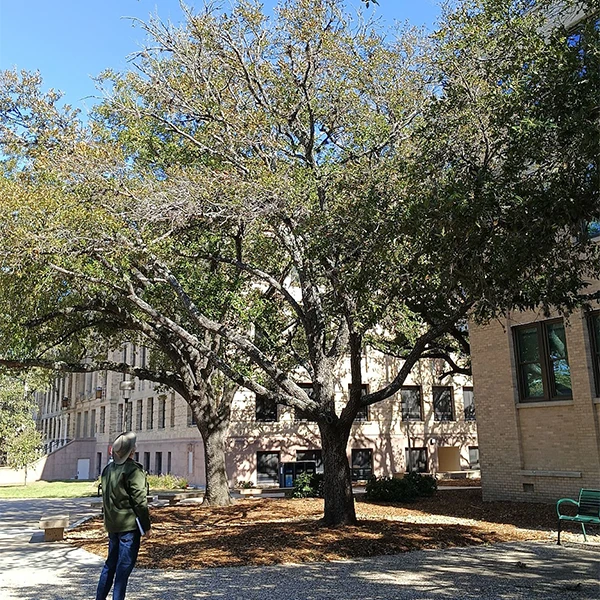
Another diagnostic tactic is to look at the other live oaks nearby. You will rarely see just one live oak with symptoms. Live oaks in a given area generally show similar symptoms together.
Red oaks show similar symptoms in the canopy branches and foliage, as shown below.
Fungal mats on the trunk of a red oak:

Foliage symptoms on a red oak leaf:
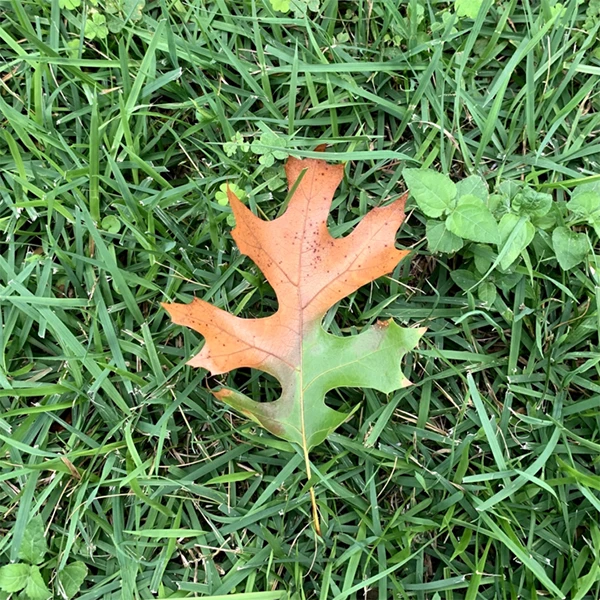
The only way to know for certain is laboratory testing of samples. Our certified arborists handle that process for you.
Can Oak Wilt Be Treated?
- Red Oaks: once symptoms appear, red oaks typically die within 4 to 6 weeks and cannot be treated successfully after infection.
- White Oaks: not technically resistant, they simply decline more slowly. They can still root graft with other species.
- Live Oaks: can often be saved with aggressive intervention. Without treatment they typically succumb.

Live oaks can survive oak wilt, but a high percentage die from it without treatment.
Below is a common oak wilt chemical treatment method.

Oak wilt can be treated preventatively, before the disease reaches your area, with an annual fungicide micro injection. Preventative treatment significantly raises the survival odds of your oaks and is the only way to protect red oaks.
Trees that already have oak wilt, live oaks for example, can be treated with the same micro injection roughly every 7 months.
Preventing Oak Wilt on Your Property
There are several things you can do to plan ahead. In active oak wilt centers, consider species other than oaks when you plant, which removes the exposure entirely on that part of the property. Preventative injections protect the oaks you already have. And every wound on an oak, whether from pruning, storm damage or a mower, gets sealed immediately.
Texas A&M Forest Service publishes the state guidance on oak wilt identification, suppression and trenching at tfsweb.tamu.edu. Our diagnosis and treatment plans follow it, and we will tell you when a case is better handled by a suppression trench than by injections alone.
Conclusion
If you are worried about oak wilt on your property or in your area, Tree Scouts can help. Our ISA Certified Arborists identify and treat oak wilt across Georgetown, Leander, Austin and the surrounding Hill Country, and will give you a plan you can act on.
Contact Tree Scouts today for a free oak wilt consultation and treatment plan.
Free estimate
Not sure what your trees need?
Book a free estimate with an ISA Certified Arborist. We walk your property, tell you what actually needs doing, and put the plan in writing. No pressure and no upsell.
500+ five-star Google reviews · ISA Certified Arborists · Insured crews · Scouts Honor promise
About the Author
Levi Williams, ISA Certified Arborist #TX-4955A | TRAQ Qualified | Wildfire Risk Reduction Qualified (WRRQ) | TDA Pesticide License #0933008 | Urban Forestry #TX-4955AF
Levi is the Lead Arborist at Tree Scouts Tree Service, headquartered in Georgetown, TX. He writes the tree risk assessments, diagnoses and treatment plans behind the company's recommendations across 12 Central Texas service areas, working to ISA and ANSI A300 standards.
He is cited as an expert source by Martha Stewart on how to trim fruit trees in the fall, how to kill a tree stump safely and trees to never plant near a driveway, and by The Spruce on spring pruning mistakes to avoid. See every citation on the Tree Scouts press page.

Request your free quote
Tell us about your trees and a real Tree Scout will get back to you quickly. We only use your information to prepare your quote.
What happens next
1
We reach out fast to confirm details, by call or text, whichever you prefer.
2
A Tree Scout confirms your free flat-rate quote on site.
3
We do the work, clean up, and walk the finished job with you. Pay the balance only when you are happy.
What We Do
Complete Tree Care for Central Texas Homes and HOAs
Every service is quoted free on site, overseen by an ISA Certified Arborist, and finished with a walkthrough before the balance is collected.

Tree Trimming
ANSI A300 pruning for live oaks and shade trees. No topping, no over-thinning.
Learn more
Tree Removal
Safe takedowns near homes, fences, and lines, with complete haul-off and cleanup.
Learn more
Stump Grinding
Flat-rate grinding 6 to 8 inches below grade, ready for sod or replanting.
Learn more
Oak Wilt Treatment
Propiconazole trunk injections and prevention plans for Central Texas oaks.
Learn more
Tree Fertilization
Deep root feeding matched to Central Texas soil and your tree species.
Learn more
Tree Planting
Right tree, right place. We source, deliver, and plant for long-term health.
Learn more
Arborist Services
Diagnosis, risk evaluation, and written reports from certified arborists.
Learn more
Emergency Tree Service
Storm damage and hazardous trees handled fast, any day of the week.
Learn moreCommon Questions
What are early signs of oak wilt?
Leaves that turn bronze or wilt in midsummer, followed by early leaf drop. On live oaks look for yellow or brown veins in the leaf. On red oaks look for fungal mats on the trunk. Rarely is just one live oak affected, so if several nearby oaks are declining together, that is a strong signal.
How does oak wilt spread?
Two ways. Underground through grafted roots between oaks, which is the most common route and the reason a whole cluster declines together. And above ground through nitidulid sap beetles that carry spores from fungal mats to fresh wounds on healthy oaks, which is why every oak cut gets sealed within minutes.
How is oak wilt treated?
Live oaks are treated with propiconazole micro injections, repeated roughly every 7 months for an infected tree and annually as prevention. Root connections between an infected tree and healthy neighbors can be severed with a trench. Red oaks cannot be saved once symptoms appear and are removed to stop them producing fungal mats. Every wound on a remaining oak gets sealed immediately.
Related Tips

Service Areas
Tree Care Across Central Texas
Tree Scouts provides ISA standard tree trimming, tree removal, and arborist care across Georgetown, Leander, Lakeway, Austin, Cedar Park, Round Rock, Pflugerville, Hutto, and the surrounding Hill Country. Every estimate is free and walked by an ISA Certified Arborist.
Georgetown
Tree care in Georgetown, TX
Leander
Tree care in Leander, TX
Austin
Tree care in Austin, TX
Cedar Park
Tree care in Cedar Park, TX
Round Rock
Tree care in Round Rock, TX
Lakeway
Tree care in Lakeway, TX
Pflugerville
Tree care in Pflugerville, TX
Hutto
Tree care in Hutto, TX
Liberty Hill
Tree care in Liberty Hill, TX
Bee Cave
Tree care in Bee Cave, TX
Dripping Springs
Tree care in Dripping Springs, TX
Marble Falls
Tree care in Marble Falls, TX