Tree Care Tips
Deep Root Fertilization for the Trees You Love
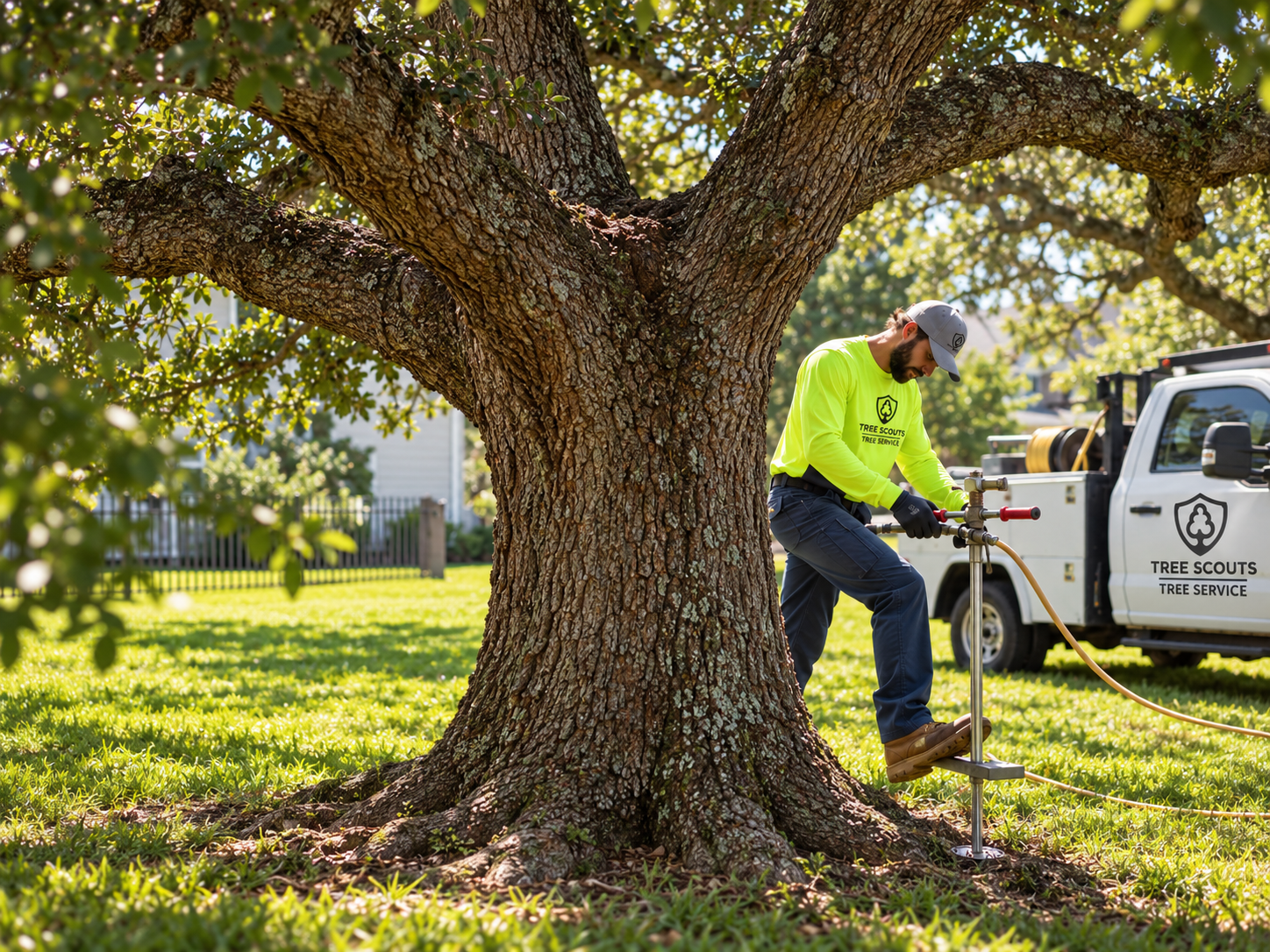
Think about the tree you would miss most in your yard. Maybe it shades the back patio, gives your kids a place to play, or has been part of the property longer than you have.
You want to keep it healthy for as long as possible. Along with proper watering and pruning, that means paying attention to what is happening beneath the lawn.
Tree Scouts now offers deep root fertilization. When a tree needs supplemental nutrients, this treatment delivers them into the soil around its roots to support healthy growth. Here is how it works and when it can help.
What is deep root fertilization
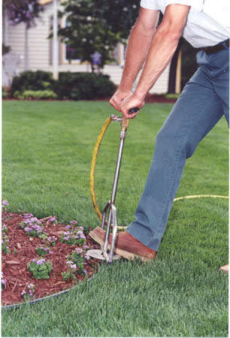
Deep root fertilization, sometimes called deep root feeding, uses a specialized probe to inject a liquid mixture of water and nutrients below the soil surface. The probe is placed at multiple points throughout the accessible root zone so the treatment is distributed across the area being cared for.
Despite the name, the goal is to reach the fine roots that absorb water and nutrients. Many of these roots grow in the upper layers of soil and spread outward beyond the trunk. Placing fertilizer deeper is not automatically better.
Why homeowners choose this treatment
Root-zone injection gives a tree care professional a way to place measured nutrients within the soil when that method suits the site. The blend, amount, and placement should follow the tree’s needs. Where a deficiency is limiting growth, correcting it can help the tree develop healthier leaves and sustain normal growth.
Your backyard soil deserves attention too
In a wooded area, fallen leaves break down and return nutrients to the soil. In our yards, we often rake those leaves away. Over time, that can reduce a source of naturally recycled nutrients.
Residential trees also live alongside driveways, patios, lawns, and foot traffic. Construction and repeated traffic can compact soil, squeezing the spaces that let roots access air and water. A tree can have plenty of room above ground while its roots face difficult conditions below.

That is why we look at soil conditions alongside nutrition. Severe compaction may call for additional soil care, such as aeration or changes around the root zone. Fertilizer alone cannot correct every soil problem.
Soil chemistry matters as well. In alkaline soils found in parts of Central Texas, some nutrients can be present but difficult for certain trees to absorb. Soil testing helps distinguish a shortage from an availability problem, so the treatment addresses what is actually happening.
How to tell whether your trees need a closer look
Changes worth checking include:
- Leaves that are unusually pale or yellow for the species and season.
- New leaves that are smaller than usual, or noticeably reduced twig growth.
- A canopy that is thinning or branches that are beginning to die back.
These signs can have several causes, including water stress, root damage, pests, or nutrient deficiencies. A closer look at the tree and soil conditions, supported by soil or leaf testing when appropriate, helps identify the right care before treatment begins.
What you can expect from the right care
When missing nutrients are part of the problem, appropriate fertilization can support better leaf color and growth over time. The response depends on the species, the deficiency, root health, and growing conditions. Some changes become apparent during a later growth flush rather than immediately after treatment.
Watering and mulch remain important parts of that care. The water delivered during a fertilizer injection does not replace a watering plan, and a drought-stressed tree needs its moisture problem addressed before fertilization is considered.
Healthy trees may already have the nutrients they need, including nutrients from a properly fertilized lawn. Surface-applied fertilizer can also be effective. The right recommendation depends on the property and the reason for treatment.
Deep root fertilization is now available from Tree Scouts
If there is a tree you want to keep enjoying for years, we would be glad to help you understand what it needs. Contact Tree Scouts to learn whether deep root fertilization belongs in its care plan, along with any watering, mulching, or soil improvements that would make a difference.
We will explain what we recommend and why. If your tree is doing well and does not need supplemental fertilizer, we will tell you that too.
Taking care of the trees you love starts with understanding them. We are here to help you give them the care they need to stay healthy and happy for the long run.
Request a free estimate or call 512-265-0861. We serve Leander, Georgetown, Austin, and surrounding Central Texas communities.
Healthy. Happy. Trees. Scouts Honor.
Free estimate
Not sure what your trees need?
Book a free estimate with an ISA Certified Arborist. We walk your property, tell you what actually needs doing, and put the plan in writing. No pressure and no upsell.
500+ five-star Google reviews · ISA Certified Arborists · Insured crews · Scouts Honor promise
Levi Williams, ISA Certified Arborist
Author of the original deep root fertilization guidance used in this article.

Request your free quote
Tell us about your trees and a real Tree Scout will get back to you quickly. We only use your information to prepare your quote.
What happens next
1
We reach out fast to confirm details, by call or text, whichever you prefer.
2
A Tree Scout confirms your free flat-rate quote on site.
3
We do the work, clean up, and walk the finished job with you. Pay the balance only when you are happy.
What We Do
Complete Tree Care for Central Texas Homes and HOAs
Every service is quoted free on site, overseen by an ISA Certified Arborist, and finished with a walkthrough before the balance is collected.

Tree Trimming
ANSI A300 pruning for live oaks and shade trees. No topping, no over-thinning.
Learn more
Tree Removal
Safe takedowns near homes, fences, and lines, with complete haul-off and cleanup.
Learn more
Stump Grinding
Flat-rate grinding 6 to 8 inches below grade, ready for sod or replanting.
Learn more
Oak Wilt Treatment
Propiconazole trunk injections and prevention plans for Central Texas oaks.
Learn more
Tree Fertilization
Deep root feeding matched to Central Texas soil and your tree species.
Learn more
Tree Planting
Right tree, right place. We source, deliver, and plant for long-term health.
Learn more
Arborist Services
Diagnosis, risk evaluation, and written reports from certified arborists.
Learn more
Emergency Tree Service
Storm damage and hazardous trees handled fast, any day of the week.
Learn moreCommon Questions
Does every mature tree need fertilizer?
No. A healthy tree with adequate nutrients may not benefit from additional fertilizer. Start with its condition and soil needs.
When should the treatment be done?
Timing depends on the species, soil moisture, product, and reason for treatment. Contact Tree Scouts to discuss scheduling for your property.
Can deep root fertilization fix compacted soil?
Fertilizer injection should not be relied on to resolve severe compaction. A tree may also need soil aeration, mulch, or changes that protect its root zone.
Related Tips


Service Areas
Tree Care Across Central Texas
Tree Scouts provides ISA standard tree trimming, tree removal, and arborist care across Georgetown, Leander, Lakeway, Austin, Cedar Park, Round Rock, Pflugerville, Hutto, and the surrounding Hill Country. Every estimate is free and walked by an ISA Certified Arborist.
Georgetown
Tree care in Georgetown, TX
Leander
Tree care in Leander, TX
Austin
Tree care in Austin, TX
Cedar Park
Tree care in Cedar Park, TX
Round Rock
Tree care in Round Rock, TX
Lakeway
Tree care in Lakeway, TX
Pflugerville
Tree care in Pflugerville, TX
Hutto
Tree care in Hutto, TX
Liberty Hill
Tree care in Liberty Hill, TX
Bee Cave
Tree care in Bee Cave, TX
Dripping Springs
Tree care in Dripping Springs, TX
Marble Falls
Tree care in Marble Falls, TX