Tree Care Tips
Your Central Texas Trees Are About to Need Water: A Mid-May Check-In for Homeowners

If you own a home in Central Texas, your trees are about to enter the hardest stretch of their year. Mid-May is the inflection point: the spring rains are mostly behind us, the soil is still holding some moisture from April, and the 100-degree days are weeks away. What you do for your trees in the next four to six weeks largely determines how they look in September — and whether you're calling an arborist in the fall to evaluate decline that didn't have to happen.
Why Right Now Matters More Than You Think
Central Texas trees are remarkably adapted to our climate. Live oaks, Monterrey oaks, cedar elms, pecans, and Texas red oaks have all evolved to handle drought. But adaptation has limits, and the last several years have pushed many residential trees past those limits. The 2011 drought killed an estimated 5.6 million urban shade trees in Texas alone. The 2022 and 2023 summers added more, and many of the trees that survived are now carrying invisible damage that becomes obvious only when stress compounds.
The frustrating part for homeowners is that rainfall in Central Texas right now is wildly uneven. Travis County just had its 15th wettest April on record. Williamson County, just 30 miles north, is in its 24th driest year-to-date in 132 years of record-keeping. Homes in Cedar Park and Round Rock may feel like spring went fine. Homes in Liberty Hill, Leander, and Georgetown may already have soils dry enough that trees are entering summer stressed.
This is why generic seasonal advice doesn't work in our region. The right question isn't "when should I water?" It's "are my trees actually dry?" Here's how to find out.
The Screwdriver Test (the One Tool Every Central Texas Homeowner Should Use)
Texas A&M Forest Service recommends a simple test: take a long screwdriver — 8 inches or longer is ideal — and push it straight down into the soil under your tree's canopy. Not at the trunk. Not at the property line. Under the canopy, ideally somewhere between halfway out from the trunk and the drip line (the edge of the canopy where rain falls off the leaves).
If the screwdriver slides in 6 to 8 inches with reasonable pressure, the soil has adequate moisture. If you can't push it in that far, the soil is too dry and your tree needs water. That's the whole test. No moisture meter, no apps, no guessing.
Repeat the test in two or three spots around the tree, because soil moisture varies depending on sun exposure, irrigation overspray, and slope. A live oak with a south-facing canopy edge near a driveway may be bone dry on one side and moist on the other. Trees in the back corner of a yard, away from the irrigation system, are almost always drier than the front yard.
What Stressed Trees Look Like (and Why You Don't Want to Wait for the Signs)
When a tree is genuinely water-stressed, it shows you. According to Texas A&M Forest Service, the most common visible symptoms are:
- Leaves dropping or wilting when they shouldn't be (live oaks, for example, are evergreen — mid-summer leaf drop is a warning sign, not a normal cycle).
- Smaller, malformed, or curled leaves on this year's growth.
- Yellowing leaves across large portions of the canopy.
- Browning leaf tips and edges, especially on the south and west sides of the tree.
- Premature fall color in July or August on species that normally hold green into October.
- Dieback at branch tips — small twigs at the outer canopy losing their leaves while the rest of the tree looks fine.
Here's the catch: by the time these symptoms appear, the tree has already been stressed for weeks. A tree under water stress shifts its energy from growth and defense to survival. The longer that lasts, the more vulnerable the tree becomes to oak wilt, hypoxylon canker, borers, and other secondary pests that target already-stressed trees. The goal isn't to react to symptoms. The goal is to water before symptoms appear.
How to Water a Tree Properly
Most homeowners water trees the same way they water grass: short, frequent cycles from a sprinkler system. That's the wrong approach for trees. Grass roots live in the top 2 to 4 inches of soil. Tree feeder roots live 6 to 24 inches down, mostly out at the drip line where the canopy ends. Lawn-style watering keeps the surface wet but never reaches the roots that matter.
The right approach is fewer, deeper watering events. A few specifics:
- Mature trees: a deep soaking every 10 to 14 days during dry stretches is usually enough. "Deep" means the water has actually reached 8 to 12 inches into the soil — verified with the screwdriver test the next day.
- Young or newly planted trees (under 3 years in the ground): more frequent watering, typically once or twice a week, with smaller volumes per event.
- Where to apply water: at and beyond the drip line, not at the trunk. The feeder roots that absorb water are on the outer edges of the root zone. Watering at the trunk wets the wrong part of the tree and can cause rot at the root flare.
- How to apply water: a soaker hose laid in a circle under the canopy, run for 1 to 2 hours, is the gold standard. A garden hose on a slow trickle, moved every 30 minutes around the canopy edge, also works. Avoid sprinklers that lose water to evaporation in the heat.
- When to water: early morning or evening reduces evaporation. Watering in the middle of a 100-degree afternoon loses much of what you apply.
One more thing: don't water based on the calendar. Water based on the screwdriver test. After a thunderstorm dumps two inches on your yard, you can skip the next scheduled watering. After two weeks of dry north wind, your tree may need water sooner than the schedule says.
The Live Oak and Monterrey Oak Question
Two of the most common shade trees in Central Texas yards are live oaks (Quercus fusiformis and Quercus virginiana) and Monterrey oaks (Quercus polymorpha, sometimes spelled Monterey). They handle our climate well, but they handle it differently.
Live oaks are deeply rooted, slow-growing, and remarkable drought survivors once mature — but they're also the species most affected by oak wilt, and a drought-stressed live oak is significantly more vulnerable to infection. If you have mature live oaks, supplemental watering during dry stretches isn't just about keeping them green. It's about keeping their immune defenses up.
Monterrey oaks are a more recent arrival to Central Texas landscapes — popular because they're fast-growing, semi-evergreen, and resistant to oak wilt. They handle heat well, but their faster growth rate means they have higher water demand than a comparable live oak. A Monterrey oak that looks bulletproof in a wet spring can decline quickly during a dry summer if it doesn't get supplemental water. The good news: they respond to deep watering visibly within days.
Both species do well with the same approach — deep, infrequent watering at the drip line, verified with the screwdriver test — but the Monterrey oak will tell you faster when it's thirsty, and the live oak will hide it longer.
Mulch: the Cheapest Insurance You Can Buy
A 2- to 4-inch layer of mulch under a tree's canopy is one of the highest-impact things a homeowner can do. Mulch reduces evaporation, regulates soil temperature, suppresses competing weeds, and improves soil structure over time. The cost is low and the payoff is significant, especially heading into summer.
A few rules: keep the mulch off the trunk itself (no "volcano mulching" — piled up against the bark). Extend the mulch ring out toward the drip line where the feeder roots are. Use coarse hardwood mulch rather than dyed bark or rubber. And replace or refresh mulch annually as it breaks down.
When to Call an Arborist
Watering and mulching handle most homeowner situations. But there are signs that warrant a professional assessment:
- Major canopy dieback that doesn't recover after watering.
- Bark splitting or sloughing off, especially on the south or west side.
- Mushrooms or conks growing at the base of the trunk or on major roots.
- Sudden lean or visible root plate movement after a storm.
- A live oak in a neighborhood where oak wilt has been confirmed.
- Heritage trees — anything 24 inches in diameter or larger — showing any signs of stress.
Replacing a mature shade tree takes 30 to 50 years. Saving one with a timely intervention takes a phone call.
Why Tree Scouts
Tree Scouts is headquartered in Georgetown and serves Central Texas with two ISA Certified Arborists on staff — Levi Williams (TX-4955A, also Wildfire Risk Reduction Qualified) and Cameron Askew (TX-5146A). We've been featured on FOX 7 Austin for spring tree care guidance, cited by Martha Stewart and The Spruce as expert sources, and we hold BBB Accreditation alongside more than 400 five-star Google reviews. Every project follows ANSI A300 standards, the national consensus standard for tree care.
Whether you need an arborist consultation, oak wilt treatment, tree fertilization, or just an honest assessment of how your trees are heading into summer, our team is here.
We serve Georgetown, Austin, Leander, Cedar Park, Round Rock, Lakeway, Liberty Hill, Hutto, Bee Cave, and the surrounding Hill Country communities. Call 512-265-0861 or book a free tree health assessment today.
Free estimate
Not sure what your trees need?
Book a free estimate with an ISA Certified Arborist. We walk your property, tell you what actually needs doing, and put the plan in writing. No pressure and no upsell.
500+ five-star Google reviews · ISA Certified Arborists · Insured crews · Scouts Honor promise
About the Author
Levi Williams, ISA Certified Arborist #TX-4955A | TRAQ Qualified | Wildfire Risk Reduction Qualified (WRRQ) | TDA Pesticide License #0933008 | Urban Forestry #TX-4955AF
Levi is the lead arborist at Tree Scouts Tree Service, headquartered in Georgetown, TX. His expertise has been cited by Martha Stewart for fruit tree pruning guidance. He oversees all arborist assessments, treatment plans, and crew operations across 12 Central Texas service areas. Levi follows ISA and ANSI A300 standards on every project.

Request your free quote
Tell us about your trees and a real Tree Scout will get back to you quickly. We only use your information to prepare your quote.
What happens next
1
We reach out fast to confirm details, by call or text, whichever you prefer.
2
A Tree Scout confirms your free flat-rate quote on site.
3
We do the work, clean up, and walk the finished job with you. Pay the balance only when you are happy.
What We Do
Complete Tree Care for Central Texas Homes and HOAs
Every service is quoted free on site, overseen by an ISA Certified Arborist, and finished with a walkthrough before the balance is collected.

Tree Trimming
ANSI A300 pruning for live oaks and shade trees. No topping, no over-thinning.
Learn more
Tree Removal
Safe takedowns near homes, fences, and lines, with complete haul-off and cleanup.
Learn more
Stump Grinding
Flat-rate grinding 6 to 8 inches below grade, ready for sod or replanting.
Learn more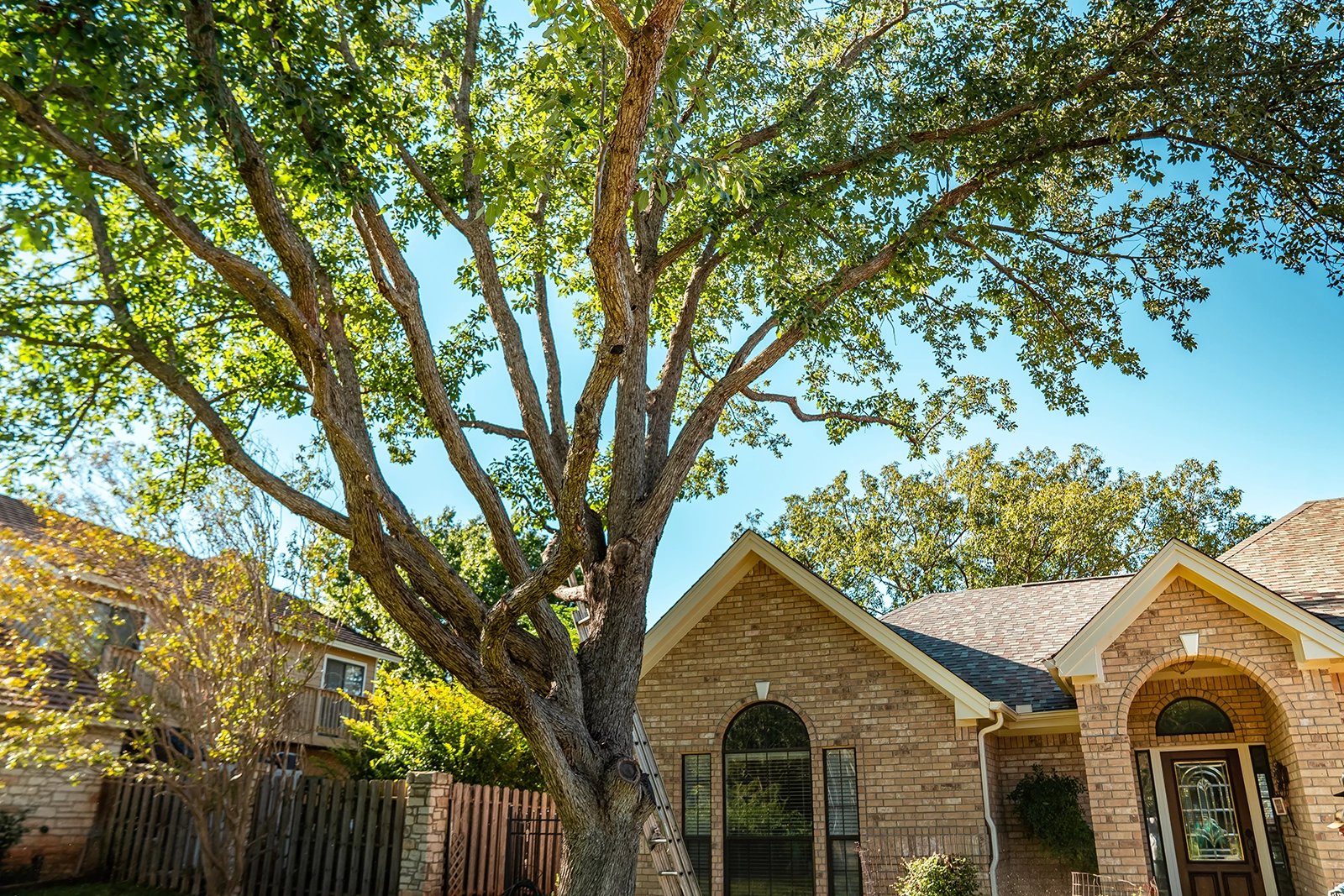
Oak Wilt Treatment
Propiconazole trunk injections and prevention plans for Central Texas oaks.
Learn more
Tree Fertilization
Deep root feeding matched to Central Texas soil and your tree species.
Learn more
Tree Planting
Right tree, right place. We source, deliver, and plant for long-term health.
Learn more
Arborist Services
Diagnosis, risk evaluation, and written reports from certified arborists.
Learn more
Emergency Tree Service
Storm damage and hazardous trees handled fast, any day of the week.
Learn moreRelated Tips


Common Questions
Leander Neighborhoods that use our tree services
Alterra | Bar W Ranch | Benbrook Ranch | Block House Creek | Bryson | Caballo Ranch | Carneros Ranch | Cold Springs | Connelly’s Crossing | Crystal Falls | Deerbrooke | Larkspur | Palmera Ridge | Reagan’s Overlook | Travisso
Georgetown Neighborhoods that utilize Tree Scouts
Berry Creek | Berry Creek Highlands | Cimarron Hills | Escalera Ranch | Georgetown Village | Oaks at San Gabriel | Parmer Ranch | Parkside on the River | Serenada | Sun City | Teravista | Water Oak at San Gabriel | Westlake of the Woods | Wolf Ranch | Gabriel(s) Overlook.
View all the locations we provide tree service to here