Tree Care Tips
When to Trim Pecan Trees in Central Texas
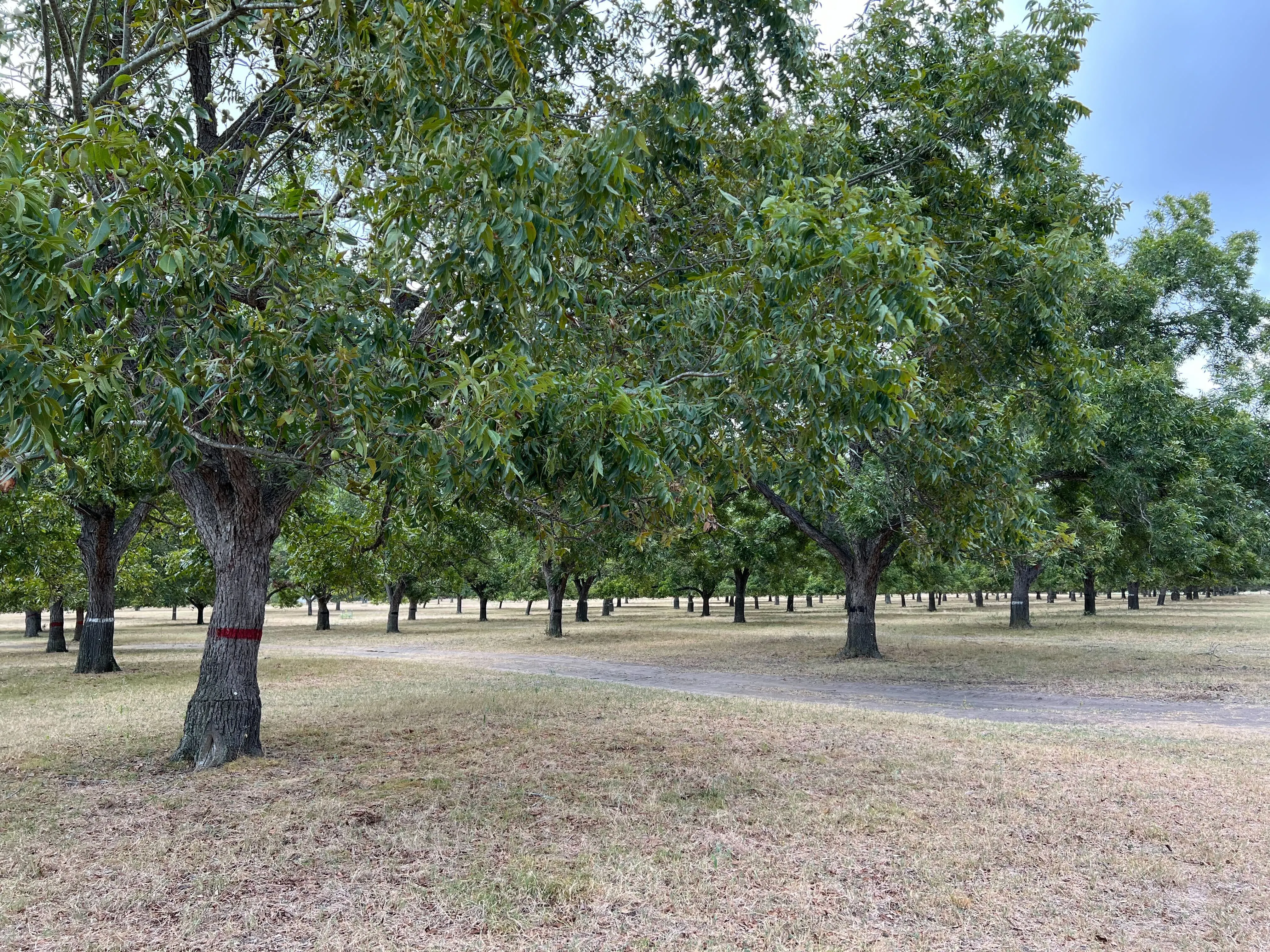
Pecans Are Not Oaks — They Need Different Timing
If you've read our guide on the best time to trim live oaks, you know that oak timing is driven by oak wilt prevention. Pecans don't have that concern — but they have their own set of timing rules that most homeowners (and frankly, a lot of tree companies) get wrong.
Pecans are everywhere in Central Texas. They line streets in Georgetown's older neighborhoods, shade backyards in Round Rock, and dominate acreage properties in Liberty Hill. They're also one of the most commonly over-pruned trees we see, usually because someone wanted to "clean them up" at the wrong time of year.
Here's what we actually recommend based on pecan tree biology and Central Texas growing conditions.
Best Time to Trim Pecans: Late Winter (January Through Mid-February)
The ideal pruning window for pecan trees in the Georgetown and Austin area is late January through mid-February — after the coldest weather has passed but before the tree starts pushing new buds.
Why this window works:
- Pecans are fully dormant, so pruning cuts don't interrupt active growth or nut production
- Without leaves, you can see the entire branch structure and make better decisions about what to remove
- Wounds made during dormancy seal faster once spring growth begins
- Pest and disease pressure is lower during cool months
Pecans are among the last trees to leaf out in spring — often not until late April or early May in Central Texas. So your pruning window is actually wider than you might think.
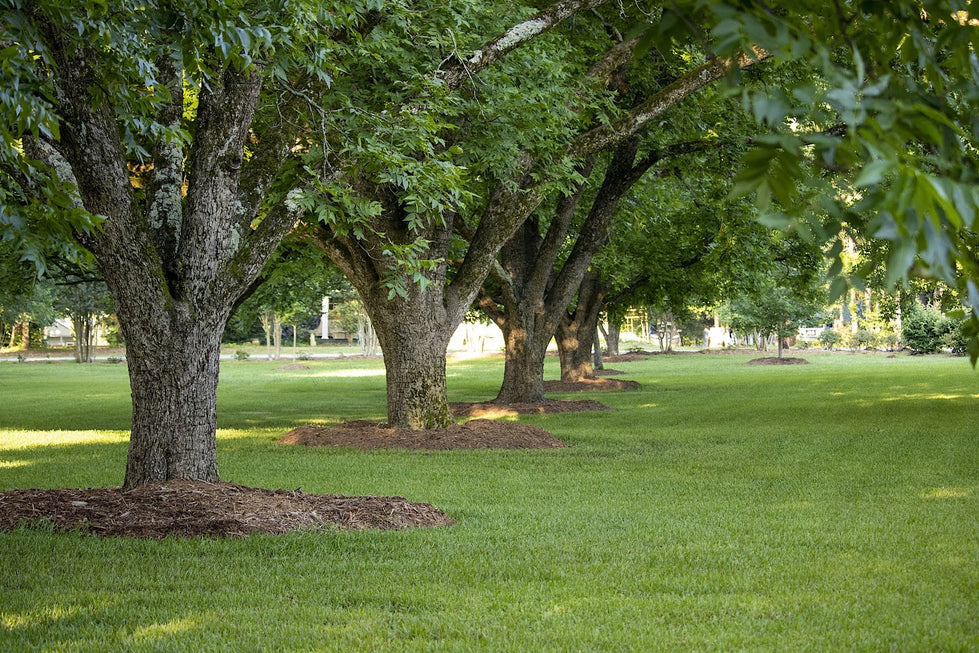
When NOT to Trim Pecans
There are specific times that pruning pecans does real harm:
During active growth (April through August). Pruning while the tree is actively growing disrupts its energy balance. The tree has already invested resources into those branches and leaves — removing them mid-season forces it to redirect energy at a time when it should be producing nuts.
Right before a freeze. Fresh pruning cuts leave open wounds that are more susceptible to freeze damage. If a hard freeze is forecast, wait until it passes before trimming.
During severe drought stress. A drought-stressed pecan is already struggling to maintain its canopy. Removing branches during a drought compounds the stress and can push the tree into decline.
The one exception to timing: dead, broken, or hazardous branches can be removed any time of year. Safety always trumps timing.
What to Actually Prune on a Pecan Tree
Pecans don't need as much pruning as most homeowners think. Here's what we focus on during a pecan pruning job:
- Dead branches. Always the first priority. Pecan wood gets heavy, and dead branches can fall without warning.
- Crossing or rubbing branches. Where two branches rub together, the friction creates wounds that invite disease and decay. Remove the weaker of the two.
- Low-hanging limbs. If branches are blocking your driveway, walkway, or roof clearance, we'll raise the canopy to the needed height without over-thinning.
- Water sprouts and suckers. These are the thin, fast-growing vertical shoots that pop up along branches or from the base. They're a sign the tree is trying to compensate for previous over-pruning or stress.
- Structural defects. Weak branch attachments (called "included bark") where two branches form a tight V-shape. These are failure points during storms.
What we don't do: strip the interior canopy, top the tree, or remove more than 25% of live branches. If a company suggests any of those, they don't know pecans.
The Topping Problem — Georgetown's Most Common Pecan Mistake
I can't tell you how many topped pecans I've assessed in Sun City, Berry Creek, and around the Georgetown square. Homeowners hire someone to "make the tree smaller," and the company cuts every major branch back to a stub. The tree responds by pushing dozens of weakly attached water sprouts from each cut — creating a dense, top-heavy mess that's actually MORE dangerous than the original tree.
Topping shortens a pecan's lifespan dramatically. The regrowth is structurally weak, the wound sites become decay entry points, and the tree loses its natural wind resistance. If your pecan is too large for the space, a certified arborist can perform proper crown reduction using reduction cuts at lateral branches — reducing size while maintaining structure.
Pecan Tree Health Beyond Pruning
Pruning is just one piece of pecan care. In Georgetown's alkaline soil, pecans often develop nutrient deficiencies (especially zinc) that cause small, pale leaves and poor nut production. Deep root fertilization with zinc-fortified treatments can make a noticeable difference in overall tree health and nut quality.
Pecans are also susceptible to pecan scab (a fungal disease) and various boring insects. If your pecan's leaves look spotted, brown, or are dropping prematurely, the issue might be disease rather than a pruning problem. An arborist assessment can pinpoint the real cause.
Schedule Your Pecan Pruning This Winter
The best time to schedule pecan pruning is now — before the dormant window closes and spring growth begins. Tree Scouts serves Georgetown, Leander, Liberty Hill, Round Rock, Austin, and Cedar Park. Book your free assessment or call 512-265-0861.
Tree Trimming Services · Tree Fertilization · Arborist Consultations
Free estimate
Not sure what your trees need?
Book a free estimate with an ISA Certified Arborist. We walk your property, tell you what actually needs doing, and put the plan in writing. No pressure and no upsell.
500+ five-star Google reviews · ISA Certified Arborists · Insured crews · Scouts Honor promise
About the Author
Levi Williams, ISA Certified Arborist #TX-4955A | TRAQ Qualified | Wildfire Risk Reduction Qualified (WRRQ) | TDA Pesticide License #0933008 | Urban Forestry #TX-4955AF
Levi is the lead arborist at Tree Scouts Tree Service, headquartered in Georgetown, TX. His expertise has been cited by Martha Stewart for fruit tree pruning guidance. He oversees all arborist assessments, treatment plans, and crew operations across 12 Central Texas service areas. Levi follows ISA and ANSI A300 standards on every project.

Request your free quote
Tell us about your trees and a real Tree Scout will get back to you quickly. We only use your information to prepare your quote.
What happens next
1
We reach out fast to confirm details, by call or text, whichever you prefer.
2
A Tree Scout confirms your free flat-rate quote on site.
3
We do the work, clean up, and walk the finished job with you. Pay the balance only when you are happy.
What We Do
Complete Tree Care for Central Texas Homes and HOAs
Every service is quoted free on site, overseen by an ISA Certified Arborist, and finished with a walkthrough before the balance is collected.

Tree Trimming
ANSI A300 pruning for live oaks and shade trees. No topping, no over-thinning.
Learn more
Tree Removal
Safe takedowns near homes, fences, and lines, with complete haul-off and cleanup.
Learn more
Stump Grinding
Flat-rate grinding 6 to 8 inches below grade, ready for sod or replanting.
Learn more
Oak Wilt Treatment
Propiconazole trunk injections and prevention plans for Central Texas oaks.
Learn more
Tree Fertilization
Deep root feeding matched to Central Texas soil and your tree species.
Learn more
Tree Planting
Right tree, right place. We source, deliver, and plant for long-term health.
Learn more
Arborist Services
Diagnosis, risk evaluation, and written reports from certified arborists.
Learn more
Emergency Tree Service
Storm damage and hazardous trees handled fast, any day of the week.
Learn moreCommon Questions
When is the best time to trim pecan trees in Central Texas?
Late winter typically late January through mid-February before new growth starts. Pecans are among the last trees to leaf out in spring, so you have a wider dormant-season window than with most species. Avoid trimming after bud break in April.
How much can you prune off a pecan tree at once?
Never remove more than 25% of the live canopy in a single year. Pecans produce heavy wood and over-pruning triggers excessive water sprout growth that weakens the tree structure long-term. Focus on deadwood, crossing branches, and structural corrections.
Should I top my pecan tree to keep it smaller?
Never. Topping is the most damaging thing you can do to a pecan. It triggers dense, weakly attached regrowth that is more likely to fail in storms. If your pecan is too large, a certified arborist can perform crown reduction using proper cuts.
Related Tips


Service Areas
Tree Care Across Central Texas
Tree Scouts provides ISA standard tree trimming, tree removal, and arborist care across Georgetown, Leander, Lakeway, Austin, Cedar Park, Round Rock, Pflugerville, Hutto, and the surrounding Hill Country. Every estimate is free and walked by an ISA Certified Arborist.
Georgetown
Tree care in Georgetown, TX
Leander
Tree care in Leander, TX
Austin
Tree care in Austin, TX
Cedar Park
Tree care in Cedar Park, TX
Round Rock
Tree care in Round Rock, TX
Lakeway
Tree care in Lakeway, TX
Pflugerville
Tree care in Pflugerville, TX
Hutto
Tree care in Hutto, TX
Liberty Hill
Tree care in Liberty Hill, TX
Bee Cave
Tree care in Bee Cave, TX
Dripping Springs
Tree care in Dripping Springs, TX
Marble Falls
Tree care in Marble Falls, TX