Tree Care Tips
Is My Tree Dead or Just Dormant? How to Tell in Central Texas

Don't Remove a Tree That Might Just Be Sleeping
Every spring, I get calls from homeowners convinced their tree is dead. The leaves haven't come back, the branches look bare, and they're ready to schedule a removal. And in some cases, they're right — the tree didn't make it through winter. But at least half the time, the tree is just dormant or slow to leaf out, and removing it would mean losing a perfectly healthy tree that simply needed a few more weeks.
Central Texas makes this especially tricky. Our winters are mild enough that some trees never fully go dormant, while others drop every leaf and look completely dead from December through March. Add in our unpredictable late freezes — the kind that hit after trees have already started pushing new growth — and it gets confusing fast.
Here's how to figure out what's actually going on with your tree before making any decisions.
The Scratch Test — Your First Check
This is the simplest and most reliable test any homeowner can do. Pick a young branch — not the main trunk — and use your thumbnail or a small knife to scrape away a tiny section of outer bark.
If the tissue underneath is green and moist: the branch is alive. The tree is dormant, not dead.
If the tissue is brown, dry, and brittle: that branch is dead.
Important: test multiple branches in different parts of the tree. A tree can have dead branches on one side and be perfectly alive on the other. Dieback in the upper canopy with green lower branches often indicates stress from drought, root damage, or disease — not total death.
The Branch Snap Test
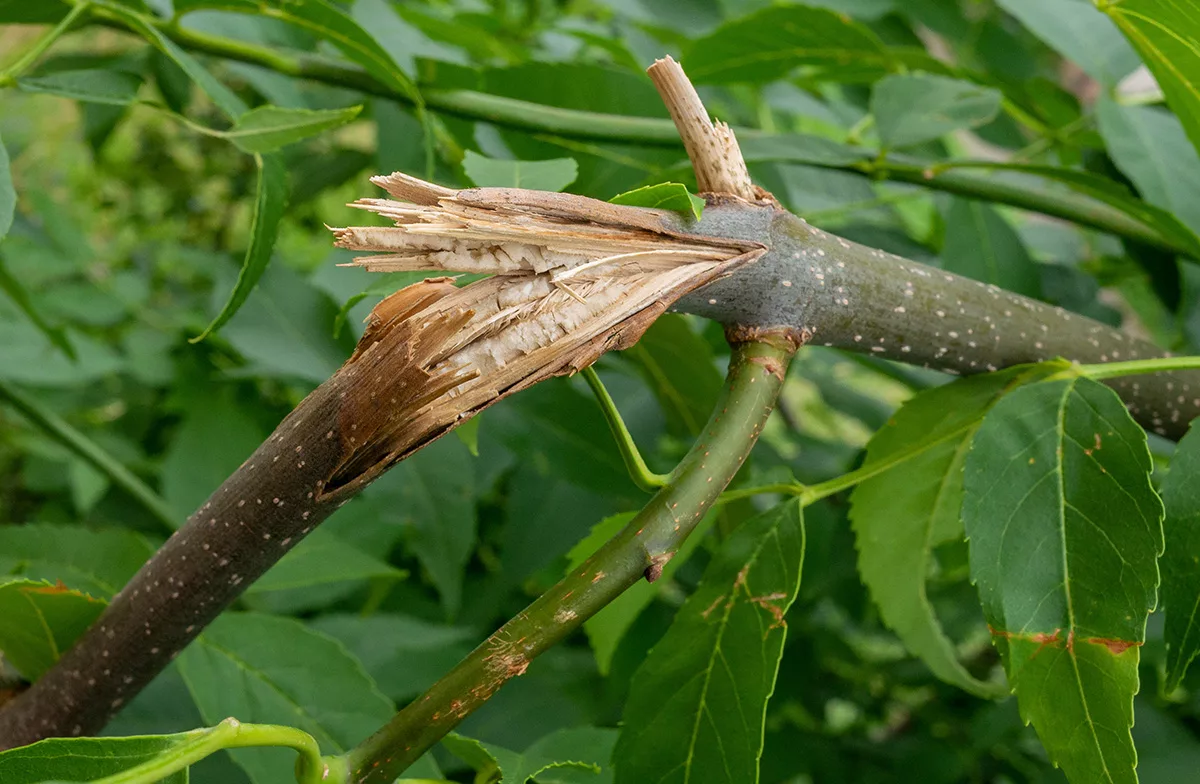
Grab a small twig or branch tip and bend it. Living branches flex and bend before breaking. Dead branches snap cleanly and feel dry and brittle — like a dried-out stick you'd find on the ground.
Do this across multiple areas of the canopy. If every branch you test snaps like kindling, the tree may be gone. If most branches flex, you've got a living tree that's just not showing it yet.
When Central Texas Trees Normally Leaf Out
One of the biggest reasons people think their tree is dead is because they're expecting leaves too early. Here's a rough timeline for the Georgetown and Austin area:
- Live Oaks: Drop old leaves in late February through March and replace them with new growth within 2-4 weeks. The brief bare period panics a lot of homeowners, but it's completely normal.
- Cedar Elms: Typically leaf out in mid-March through early April.
- Pecans: Among the last to leaf out — often not until late April or even early May. If your pecan looks dead in March, relax. It's just slow.
- Red Oaks: New leaves appear in March, but late freezes can kill the first flush and delay the second round by several weeks.
- Crape Myrtles: Very late to leaf out. Don't panic until mid-May.
Signs Your Tree Actually Is Dead (or Dying)
If the scratch test and snap test both indicate dead tissue across the entire canopy, look for these additional signs:
- Bark falling off in sheets. Healthy trees hold their bark. When large sections peel away and expose smooth or decayed wood underneath, the tree has been dead for a while.
- Mushrooms or fungal conks at the base. These indicate internal decay — often fungal root rot that's been progressing for months or years.
- Major cracks in the trunk. Deep vertical or spiral cracks often mean the wood has dried out and lost structural integrity.
- Leaning that wasn't there before. New lean indicates root failure. Combined with other dead-tree signs, this becomes a safety emergency.
- Woodpecker activity. Woodpeckers target trees with insect infestations. Heavy woodpecker damage often means the tree has been compromised from the inside.
What Kills Trees in Central Texas (Beyond Drought)
When I assess a dead or dying tree in Georgetown, the cause usually falls into one of these categories:
Oak wilt. The #1 tree killer in our area. Live oaks can die within months of infection. If your live oak is losing leaves from the canopy tips inward with distinctive vein banding patterns on the leaves, get it assessed immediately.
Construction damage. Root compaction and severing during nearby construction is a slow killer. Trees can look fine for 1-2 years after root damage and then decline rapidly.
Freeze damage. Central Texas freezes are unpredictable. A tree that survived ten mild winters may not survive one hard freeze, especially if it's a species at the edge of its hardiness zone.
Chronic drought stress. Texas droughts weaken trees over time. A tree stressed by three consecutive dry summers may finally give out in the fourth. Abiotic stress is a slow, cumulative process.
When to Call an Arborist
If you've done the scratch and snap tests and you're still not sure, call a certified arborist before removing anything. We can assess cambium health at the trunk level, check root collar condition, and sometimes send lab samples for disease confirmation. A 15-minute assessment can save you from removing a tree that had years of life left — or from leaving a dead tree standing that could fall on your house in the next storm.
Dead trees become hazards fast in Texas heat. The wood dries out, becomes brittle, and can fail without warning. If your tree is confirmed dead, prompt removal is the safest path forward.
Not Sure About Your Tree? Get a Free Assessment.
Tree Scouts provides free on-site tree health assessments with an ISA certified arborist. We'll tell you honestly whether your tree is alive, recoverable, or needs to come down. We serve Georgetown, Leander, Austin, Cedar Park, Round Rock, Lakeway, and Hutto. Book your free assessment or call 512-265-0861.
Free estimate
Not sure what your trees need?
Book a free estimate with an ISA Certified Arborist. We walk your property, tell you what actually needs doing, and put the plan in writing. No pressure and no upsell.
500+ five-star Google reviews · ISA Certified Arborists · Insured crews · Scouts Honor promise
About the Author
Levi Williams, ISA Certified Arborist #TX-4955A | TRAQ Qualified | Wildfire Risk Reduction Qualified (WRRQ) | TDA Pesticide License #0933008 | Urban Forestry #TX-4955AF
Levi is the lead arborist at Tree Scouts Tree Service, headquartered in Georgetown, TX. His expertise has been cited by Martha Stewart for fruit tree pruning guidance. He oversees all arborist assessments, treatment plans, and crew operations across 12 Central Texas service areas. Levi follows ISA and ANSI A300 standards on every project.

Request your free quote
Tell us about your trees and a real Tree Scout will get back to you quickly. We only use your information to prepare your quote.
What happens next
1
We reach out fast to confirm details, by call or text, whichever you prefer.
2
A Tree Scout confirms your free flat-rate quote on site.
3
We do the work, clean up, and walk the finished job with you. Pay the balance only when you are happy.
What We Do
Complete Tree Care for Central Texas Homes and HOAs
Every service is quoted free on site, overseen by an ISA Certified Arborist, and finished with a walkthrough before the balance is collected.

Tree Trimming
ANSI A300 pruning for live oaks and shade trees. No topping, no over-thinning.
Learn more
Tree Removal
Safe takedowns near homes, fences, and lines, with complete haul-off and cleanup.
Learn more
Stump Grinding
Flat-rate grinding 6 to 8 inches below grade, ready for sod or replanting.
Learn more
Oak Wilt Treatment
Propiconazole trunk injections and prevention plans for Central Texas oaks.
Learn more
Tree Fertilization
Deep root feeding matched to Central Texas soil and your tree species.
Learn more
Tree Planting
Right tree, right place. We source, deliver, and plant for long-term health.
Learn more
Arborist Services
Diagnosis, risk evaluation, and written reports from certified arborists.
Learn more
Emergency Tree Service
Storm damage and hazardous trees handled fast, any day of the week.
Learn moreCommon Questions
How do I know if my tree is dead or just dormant?
Use the scratch test: scrape a small section of bark on a young branch with your thumbnail. Green or moist cambium underneath means the tree is alive. Brown, dry, brittle tissue means that branch is dead. Test multiple branches in different areas.
Why hasn't my tree leafed out yet this spring?
Different species leaf out at different times in Central Texas. Live oaks drop and replace leaves in March. Pecans may not fully leaf out until late April. A late freeze can also delay leafing. If it is May and branches are still bare, have an arborist check.
Should I remove a tree that looks dead?
Not without a professional assessment first. What looks dead may be recoverable with proper treatment. But if the tree is confirmed dead, removal should happen promptly as dead trees become brittle quickly in Texas heat.
Related Tips
.jpg)


Service Areas
Tree Care Across Central Texas
Tree Scouts provides ISA standard tree trimming, tree removal, and arborist care across Georgetown, Leander, Lakeway, Austin, Cedar Park, Round Rock, Pflugerville, Hutto, and the surrounding Hill Country. Every estimate is free and walked by an ISA Certified Arborist.
Georgetown
Tree care in Georgetown, TX
Leander
Tree care in Leander, TX
Austin
Tree care in Austin, TX
Cedar Park
Tree care in Cedar Park, TX
Round Rock
Tree care in Round Rock, TX
Lakeway
Tree care in Lakeway, TX
Pflugerville
Tree care in Pflugerville, TX
Hutto
Tree care in Hutto, TX
Liberty Hill
Tree care in Liberty Hill, TX
Bee Cave
Tree care in Bee Cave, TX
Dripping Springs
Tree care in Dripping Springs, TX
Marble Falls
Tree care in Marble Falls, TX